Rosicrucian Alchemy
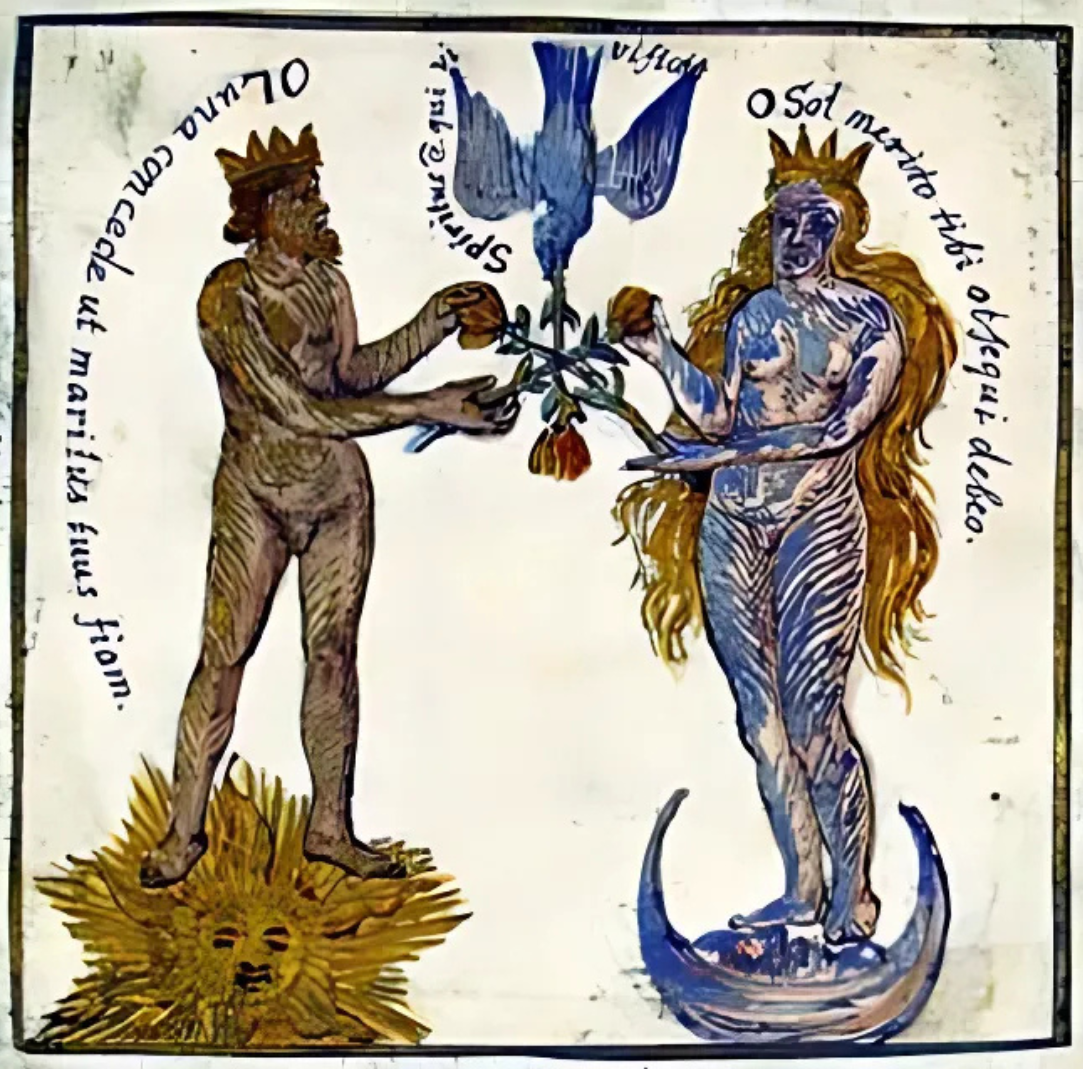
By Fra AMA
Our world today is curiously paradoxical. We are surrounded by information and yet it is so challenging to find answers. There is perhaps no other subject more misrepresented in our modern times than that of Alchemy. Yet, between the 16-19th centuries over 4,500 books were written upon the subject. Yet if you were interested in the subject only 20 years ago, you would be lucky to find a handful of resources. Now, not only can we find copies of many of these old writings, but we can also find countless other books that claim to contain the secrets and mysteries of alchemy, many of which are simply contemporary authors using the cryptic and enigmatic language of alchemy to promote their own personal narratives.
During the Middle Ages, the term Puffer was often applied to pseudo-alchemists or charlatans who applied alchemical imagery and terminology to market their own miracle cures and gadgets. It would appear that this Puffery is all too common in the 2010s–2020s as well.
And yet, in the eighteenth century when Freemasonry was being established, we find the greatest intellectuals of the time discussing the Art of Transmutation. Indeed, the very first historically known Rosicrucian society (Orden des Gold- und Rosenkreuz) was an alchemical society, where candidates were expected to be proficient in laboratory alchemy. We could simply pass off all the physical alchemy as being a simple metaphor for more metaphysical pursuits, but then we would be doing a great injustice to the tremendous advances made in science and medicine achieved through practical alchemical work.
So, what was this work? Is there any truth to some of the amazing alchemical claims? Could alchemists really turn metal into gold; cure any disease; and provide the key to immortality? And why should any of this be relevant to us in the twenty-first century?
History of Alchemy
It is likely that the term alchemy derives from the ancient Egyptian word for Egypt (transliterated to Kemet). This Egyptian word literally means "Black Earth" and alludes to the fertile black soil of the Nile where new life would spring from the old each season. This word would later be used by Arabs as al-kīmīā, which became the Arabic word for chemistry.
It might seem surprising to some that we have to travel this far back in time to understand the writings of alchemists in the fifteenth, sixteenth, and seventeenth centuries, but it is important as many alchemists throughout history claimed that their alchemical wisdom was derived, at least in part, from the writings of a wise Egyptian sage known as Hermes Trismegistus. It is unknown whether Hermes Trismegistus was a real person or a mythical figure. Nevertheless, there are a wealth of writings which are attributed to him. Most of these writings were written during Hellenistic Egypt (Ptolemaic dynasty) from 305 BCE. The subjects covered in these hermetic texts include philosophy, cosmogony, astrology, and magic.
From a scholarly perspective, hermetic texts can be divided into two broad categories: The Technical Hermetica and The Theoretical Hermetica (Copenhaver, 2000, p. xxxii).
The Technical Hermetica
As its name would suggest, this division of the hermetica deals with technical subjects, such as science, astrology, botany, medicine, and magic. The Technical Hermetica flourished during the Islamic period, which is why Islamic alchemists were much more proficient with physical alchemy, bringing about massive advances in chemistry, medicine, and physics.
Some examples of Technical Hermetic texts include:
Cyranides: A magical-medical text.
Myriogenesis: An astrological-magical text.
The Emerald Tablet: An unusual short text of unknown origin. This is where we get the phrase "That which is above is like that which is below; and that which is below is like that which is above; to accomplish the work of the One thing."
The Theoretical Hermetica
The Theoretical Hermetica is by far and large the more popular division of hermetic texts and it makes up the bulk of hermetic writings. The Theoretical Hermetica deals with cosmogony, ontology, good and evil, salvation, and the relationships that exist between Man, Nature, and God.
Some examples of Theoretical Hermetic texts include:
Greek Tractates: Greek dialogues written during Hellenistic Egypt from ~305 BCE. However, there is abundant evidence to suggest that these writings were originally composed much earlier and may have formed a portion of the curriculum of the ancient Egyptian Mystery School Tradition. These dialogues are usually what people are referring to when they discuss The Corpus Hermeticum or The Hermetica.
Asklepius (sometimes referred to as The Perfect Sermon).
Whilst these divisions serve us well to appreciate the journey of hermetic wisdom from ancient Egypt to today, we should keep in mind that to the hermetic philosopher, these divisions are completely arbitrary. Hermetic philosophy was originally understood as a single holistic philosophy.
Collectively, the hermetic texts discuss the relationships existing between man, the universe, and God. One of the common themes within these texts is that the universe was created, and is sustained, by the Mind of God (often called Nous). The hermetic texts describe Man as a microcosm of God, and as such, our own mind is considered a divine faculty which can be utilised to understand our Self and to transform the world around us.
It was these hermetic writings that formed the basis of alchemy. In many ways, we could consider alchemy to be a practical application of hermetic philosophy. For the next several centuries, this alchemical tradition was nurtured in Alexandria. Some notable alchemists during this period include Mary the Jewess and Zosimus of Panopolis. After Alexandria, alchemy was raised to new heights in the Middle East, particularly Iran and Iraq, where it was used to underpin scientific advances in chemistry, physics, and medicine. Some notable alchemists during this period include Jabir ibn Hayyan (Geber), Muhammad ibn Zakariya al-Razi (Rhazes), and Ibn Sina (Avicenna).
However, aside from a couple of lesser known (although not insignificant) alchemical texts (such as Turba Philosophorum), we do not get many alchemical texts arriving in Europe until the Renaissance, when an Italian monk named Marsilio Ficino translates much of the Corpus Hermeticum. During this period, Europe is abuzz with hermetic philosophy and esoteric thought. It is also at this time that we find many notable alchemists that have now become popular names in esotericism such as Paracelsus, whose legacy would go on to influence the Rosicrucians and many later alchemists of the Middle Ages. In fact, the first Rosicrucian manifesto (the Fama Fraternitatis) attributes the wisdom of Paracelsus among the many treasures found within the tomb of Christian Rosenkreuz.
After Paracelsus, alchemy gains much of the character that we come to associate with it today. In the following 150 years, metallurgists, physicians, and natural philosophers write thousands of books upon the subject; all hastened by new advancements in printing technology. Even until the mid-eighteenth century, alchemy is still being discussed, particularly by Freemasons. This interest would culminate in the founding of The Order of the Golden and Rosy Cross (German: Orden des Gold- und Rosenkreuz) in the 1750s, where alchemy is the primary topic of discussion. However, in general, alchemy begins to lose its appeal. The quantity of alchemical writing reduces dramatically and interest in alchemy outside of these specialist groups all but wanes.
However, in the mid-nineteenth century, occult subjects experience a revival in Britain and France, and with this occult revival, alchemy receives renewed attention. This is particularly influenced by the author Éliphas Lévi who writes in his cornerstone text, Transcendental Magic:
“Behind the veil of all the hieratic and mystical allegories of ancient doctrines, behind the shadows and the strange ordeals of all initiations, under the seal of all sacred writings, in the ruins of Nineveh or Thebes, on the crumbling stones of the old temples, and on the blackened visage of the Assyrian or Egyptian sphinx, in the monstrous or marvellous paintings which interpret to the faithful of India the inspired pages of the Vedas, in the strange emblems of our old books of alchemy, in the ceremonies at reception practised by all mysterious societies, traces are found of a doctrine which is everywhere the same, and everywhere carefully concealed.” — Lévi, 1910, p. 3
It is possible to see in this quote some correspondence being made between various esoteric and religious traditions. This comparative esotericism not only revitalises alchemy, but would go on to influence Martinism, the Golden Dawn, Theosophy, and of course, Rosicrucianism. Lévi’s works would inspire such notable people as Papus and Joséphin Péladan. For perhaps the first time, we begin to see alchemy merge with ritual, mysticism, and magic. But this alchemical renaissance comes at a cost. Alchemy loses much of its identity that it had developed over the centuries, and it begins to be conflated with other traditions. Much of the alchemy studied during this period would have been close to unrecognisable to the alchemists of the Middle Ages.
From here, the floodgates open and alchemy is ascribed to all manner of meta-narratives. Some of these meta-narratives simply use the allure of alchemical imagery and symbolism to market books and gadgets. It is no wonder that many start to see alchemy as a frivolous pseudoscience.
The purpose of this small history lesson is not to impress upon you at length and detail the milestones of each advancement in alchemy. Rather, what I wish to emphasise is the journey of alchemy from a hermetic philosophy inspired from the ancient Egyptian mystery schools, to inspiring great men and women to do great things in medicine and science; and at each step, not just imparting part of its own wisdom, but also absorbing a fragment of the tradition of the time as it travels down the winding path to us today.
It is this journey that helps us to appreciate some of the symbols that are used in alchemy. This journey should also impress upon us that alchemy is adaptable. The fact that it can survive for so long, that it can be applied to art, science, philosophy, medicine, and spirituality tells us that whatever alchemy has to say, it must be fairly important and powerful. We might therefore assume that alchemy is something terribly complex and something that only an advanced mind could readily understand. But then we hear from Paracelsus who states that:
“Any one can at pleasure learn this Art in Alchemy, since it is so simple and easy; and by it, in a short time, he could make any quantity of silver and gold.” (Coelum Philosophorum)
And to achieve progress in Alchemy, one only needs to be:
“...truthful, simple, patient and persevering.” (A Short Catechism of Alchemy)
Philosophy of Alchemy
If you are so inclined, you can read through Paracelsus’ works. His importance cannot be understated, especially to the world of medicine. This was a time when balancing humors via blood-letting and purging was a standard medical treatment; and Paracelsus dared stand against the medical authority of the time and suggest doctors not bleed patients into unconsciousness; that they should keep wounds clean; that fresh food, water, and air are conducive to good health… how radical! It was also Paracelsus who introduced Salt to the alchemical trinity of Salt, Sulphur, and Mercury.
If you were to read Paracelsus’ works, you may find the above quotes regarding the simplicity of alchemy as being rather hypocritical. Indeed, his books are quite complex. But we could talk about our Rosicrucian/Masonic/Mystical journey rather similarly. After all, all you need to be a great Man is the Volume of the Sacred Law and an earnest desire to better yourself. This is simple. This is true. But it says nothing about the journey each of us must take as sojourners towards the Greater Light. It does not emphasise the effort required nor our participation in the work.
Principles of Alchemy
I’ll do my best to simplify some of the fundamental tenets of alchemy and remove some of the archaic terms. These points should not be considered as authoritative. Keep in mind that there was no single school of alchemy, no universal alchemical philosophy, and no overarching authorities on the subject. Alchemists often disagreed with each other and occasionally they changed their opinions over the course of their own lives. Some alchemists even contradicted themselves within their own works!
Nevertheless, these tenets I have set out below are almost universally agreed upon by many alchemists of note. You may also notice that when we peer behind the cryptic language and symbolic imagery, we find a philosophy that is quite unchanged since the original hermetic writings.
1. All Creation Comes From One Indivisible Source
All creation is emanated from one indivisible divine source and all things still have a spark of the divine contained within them. This spark was commonly referred to as Spirit by alchemists. This is true for all things, whether they be considered living or non-living. In fact, to many alchemists, all things were considered to be alive as a result of this spark. Therefore, plants, planets, metals, animals, people, and minerals were all considered as living things and proof of life was perceived within their movement and forms, even if some things (such as rocks and metals) move slower than us.
2. God Creates by Limiting His Own Infinity
As creation emanates away from the divine source, it becomes more material. We therefore have a spectrum or hierarchy of being. A wise man is superior to a dull man. Similarly, there are some metals which are superior to other metals. Naturally, gold is the most superior of metals.
This concept can be more easily visualised using the illustration by Dr. Robert Fludd. Fludd illustrated this principle by a single-stringed musical instrument called a Celestial Monochord. We can appreciate from this image that the different realms of creation (such as animals, vegetables, minerals, angels, etc.) are simply like different octaves upon a universal scale, tuned by the hand of God.
3. Law of Correspondence
Continuing with Fludd’s Celestial Monochord, we can appreciate that the different octaves of creation share a sympathetic relationship (or resonance) just like musical notes. Just as there is a sympathetic relationship between C4 (middle-C) and C5, there is likewise a sympathetic relationship between planets, colours, musical notes, organs, and metals. For instance, Mars shares a sympathetic relationship (or rules over) iron. Alchemists combined this knowledge with the humoral theory of medicine to affect health.
4. Nature Is in a State of Perfecting Itself
Many alchemists believed that all things were desiring to return to their source and all things evolved over time. This longing for return was due to the spark of divinity contained within all things. However, this spark was covered up by dross. The process of evolution was to remove the dross to expose the divinity within. Some things expressed this divinity more than others. Gold was a more perfect metal than was copper.
This analogy also applied to humans, with wise men being more pure than non-wise men. The wise man did not necessarily have more divinity; rather, he had less dross allowing the Spirit within to shine forth in its splendour. Left to its own devices, Spirit would still evolve, or spiritualise matter, but to hasten this process and to help it reach its zenith, the alchemist would need to intervene.
5. The Alchemist as Nature's Assistant
Extending upon the previous point, whilst all things slowly advanced towards their evolutionary summit, this process would take a long time. Inferior metals, such as lead and tin, if left in the earth long enough, would eventually rarify to gold, but this would take a very long time. The alchemist's job, therefore, was to assist Nature and hasten this process. Many alchemists considered themselves to be Nature’s assistant, and by extension, a servant of God. Many considered alchemy to be a spiritual work and were devoutly religious.
To the alchemist, religion and spirituality were not a matter of imposing God onto the worshipper; rather, religion and spirituality brought the worshipper to the presence of God within. This also reconciles the seeming points of difference between physical and spiritual alchemy. They were not separate works; rather, they are outward and inward effects of a single work.
According to the alchemist, by understanding the basic laws that govern their beings, and by extension the entire universe, we may learn to recognise the divine presence resident in all organisms. The alchemical work was directed at isolating, purifying, and manipulating this divine presence to assist Nature in her rectification.
This assisting of Nature is what is referred to as transmutation. Alchemical transmutation therefore does not involve destroying or ignoring impurities; rather, it involves working with them to transmute them into something more noble. The alchemist did not begin his work by placing perfect things into his crucible.
As you can see from these basic alchemical principles, alchemy is a holistic philosophy. It should be appreciated how this single philosophy can be applied to seemingly distinct subjects such as science, art, and medicine. The balance between physical and transcendental alchemy is perhaps best summarised by the phrase Ora et Labora (Pray and Work). The alchemist viewed Man as but a microcosm of Nature and Nature but a microcosm of the Universe, with all three of these spheres sharing intimate relationships through a sympathetic resonance.
The Philosopher’s Stone
The pinnacle of the alchemical process was something occasionally referred to as The Philosopher’s Stone. This can be quite a challenging concept to understand, but let’s return to our first principle regarding alchemical philosophy: that all things have contained within a spark of the Divine, often called Spirit.
Theoretically, if an alchemist could remove all the dross from their starting material and isolate Spirit, then they would be left with an undifferentiated spark of divinity, replete with all the faculties of its divine source. Therefore, the alchemical process:
When applied to a metal, would yield gold;
When applied to a plant, would yield a healing panacea able to cure any disease;
When applied to man, would allow him to become a living expression of Spirit, or in other words, attain Illumination.
From this perspective, each of the great avatars throughout time could be considered a veritable living Philosopher's Stone able to transmute those of whom they inspire.

Robert Fludd (1574-1637) envisioned the universe like a long, single-string
instrument called a Monochord. All natural phenomena were like octaves
on this giant instrument. And just like a musical instrument, sympathetic
resonance occurred between certain notes.
Sources:
Copenhaver, B. P. (2000). Hermetica: the Greek Corpus Hermeticum and the Latin Asclepius in a new English translation with notes and introduction. Cambridge: Cambridge University Press.
Lévi, É. (1910). Transcendental Magic: A complete translation of ‘Dogme et Rituel de la Haute Magie’ by Arthur Edward Waite. Chicago: de Laurence, Scott & Co.