The Esoteric Symbolism of Ritualistic Aprons in Initiatic Traditions
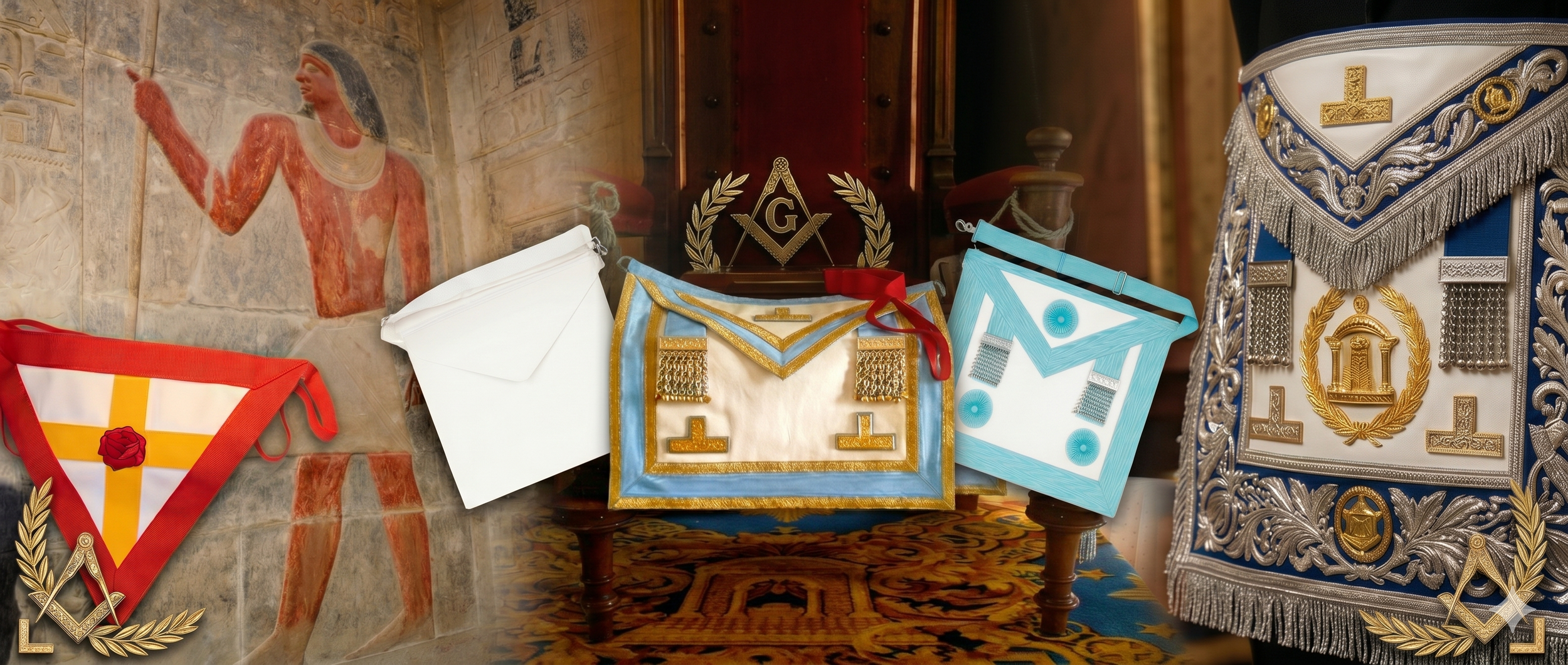
Recently, I’ve been given the great privilege of assuming the office of Worshipful Master of a Masonic Lodge. In my jurisdiction, Worshipful Masters are distinguished by a new apron. Naturally then, I’ve spent a bit of time of late reflecting upon the purpose and symbolism of aprons. Not just this Masonic apron, but ritualistic aprons in general.
For many Freemasons, an apron comes with certain instructions and guidance sourced from ritual, tradition, and (if you are lucky enough) from Masonic education. This means that many Freemasons have a fairly consistent perspective upon the meaning of this curious device.
However, prior to joining Freemasonry, I had been an active member of another initiatic order that also made use of ritualistic aprons.
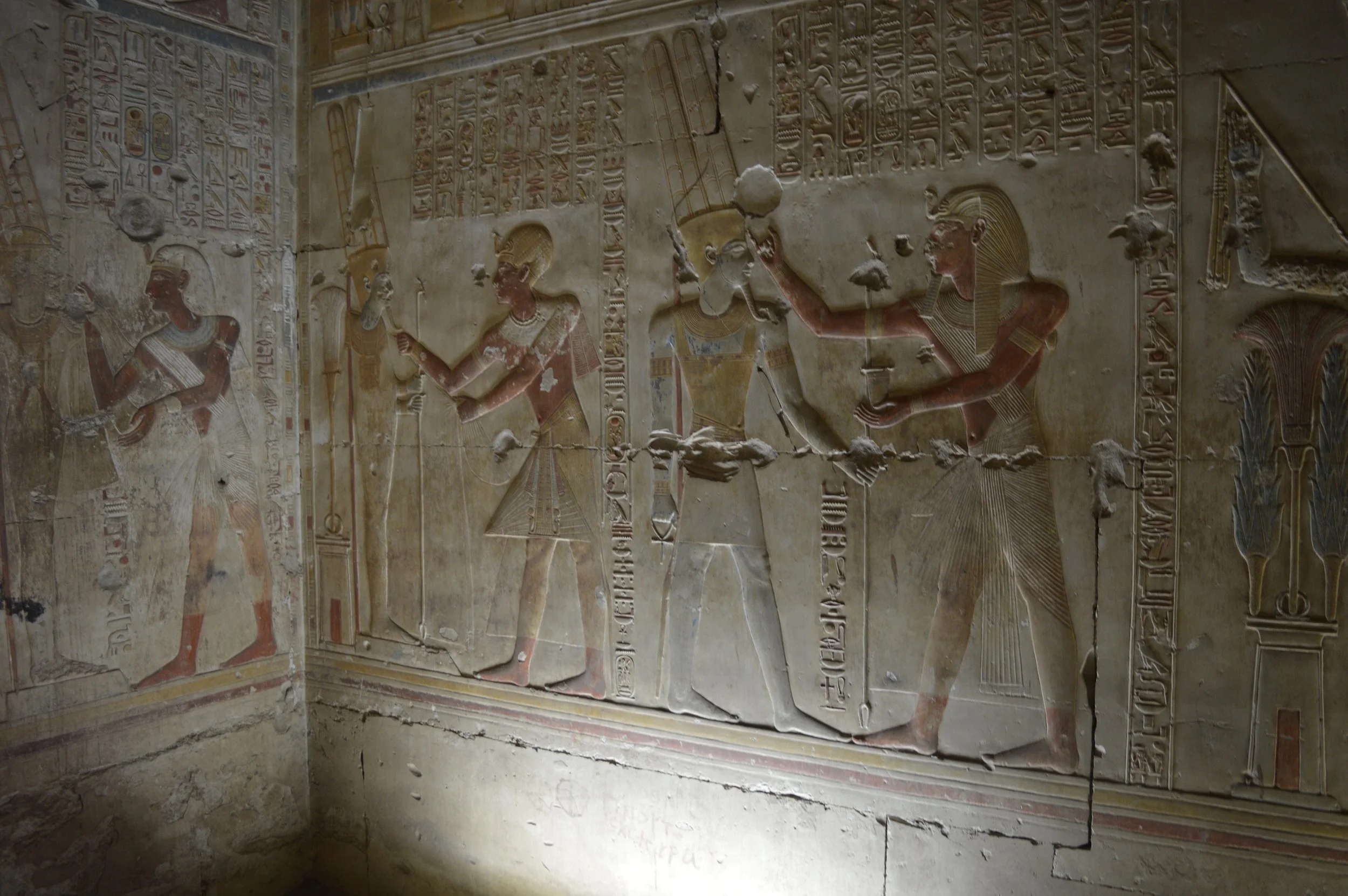
A ritual apron as depicted in ancient Egyptian reliefs, from the Temple of Seti I at Abydos. Photo by the author.
For about ten years prior to joining Freemasonry, I had been a member of The Rosicrucian Order, AMORC. Despite what many might think, there are a great deal of differences between the two organisations. In particular, I always found the teachings regarding aprons within Freemasonry to be at odds with my prior experience and understanding.
When I first joined the Craft it quickly became apparent to me that my background in AMORC afforded me certain advantages when it came to understanding Masonic symbolism, relative to a newcomer to ritual in general. This is not because there are Masonic symbols within AMORC (in fact, there are very few symbols that would be recognised across both traditions), but because AMORC overtly encourages a much more reflective and mystical approach to the understanding of symbols. So where many Masons might conclude that a particular symbol contains the meaning imparted to them as provided during a particular charge or lecture, an AMORC member might spend more time in meditation and subsequently form many conclusions, some of which may adapt and change as their understanding progresses.
However, we should not conclude from this that the use of symbols in both organisations is different. It is not. No, the way symbols can be used as an encryption device is universal. To borrow a modern metaphor, it is not a bug, but a feature. What it does mean is that Masonic education in many jurisdictions is simply lacking. All members should be taught how to meditate and reflect upon symbols so as to gain deeper insights into how these symbols connect with them in a personal as well as communal way. In fact, if we listen carefully, we are in fact instructed to seek out these hidden meanings.
Nevertheless, I should also add in the important clarifier that, while being a member of AMORC, I had the opportunity to work as an active member within a vibrant AMORC Lodge. Not all AMORC members get this opportunity. In fact, most members will never set foot within an AMORC group. But this distinction does bring with it certain privileges, such as additional training and guidance that is unique to an AMORC affiliated body.
Given my background, I’ve spent a great deal of time contemplating the symbols and devices used across the initiatic landscape. Some of these are not unique to Freemasonry, but appear in many orders. For instance, both Masonic and AMORC Lodges have rectangular Temples oriented to the cardinal directions. Members of both orders are encouraged to square their Temples as part of ritualistic etiquette. And both Orders make use of a ritualistic apron. And whilst most of the commonalities found in both Orders share a common meaning, I always found a curious distinction between the two Orders regarding the use of ritualistic aprons. And only recently have I been able to reconcile this difference into a harmonious understanding.
But before I describe how I reconciled this distinction, I should at first provide some information about how aprons are used across both organisations.
Comparing the Ritual Aprons of AMORC and Freemasonry
The Rosicrucian Apron in AMORC
In AMORC, there is only one apron. This apron is used prior to conducting work in one’s personal Sanctum (home study/oratory space) or before entering a Temple. The apron is a white triangle with red trim, containing a golden cross, with a red rose affixed in its centre. The apron is tied with a red band, and secured just above the left hip with an ‘ankh’ knot (think of a shoe lace knot, but with one loop pulled loose).
The meaning of the apron is imparted in several locations, but perhaps most impressively at the conclusion of the First Temple Degree initiation, when the candidate is presented with the apron by the Medallist and charged to wear it as an emblem of work and worship.
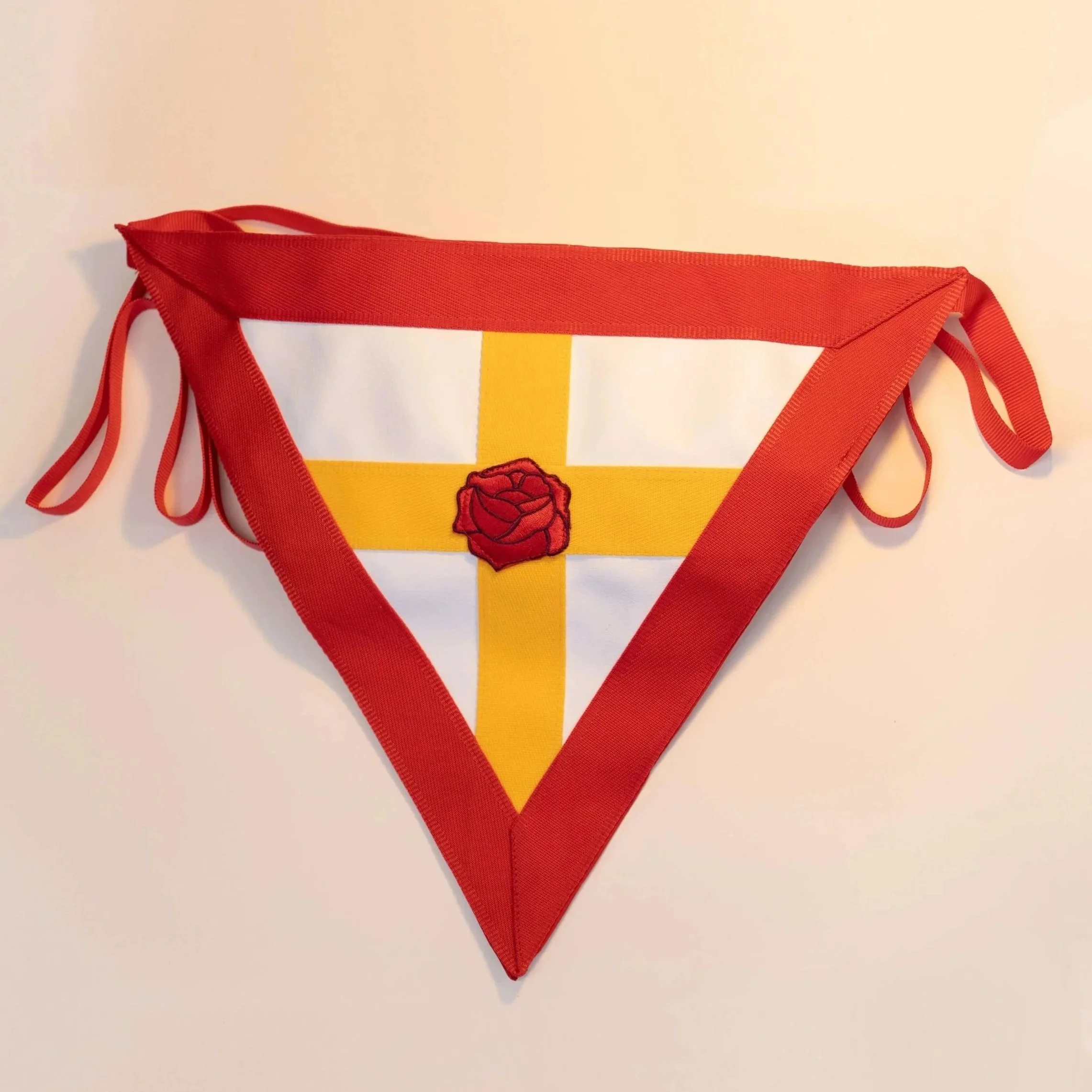
This is just one version of an AMORC apron. Often, the rose is actually a separate piece that is affixed to the cross, providing a 3-dimensional look. This image is sourced from shop.amorc.org.au.
The Masonic Apron in the Craft Degrees
Masonic aprons differ widely across jurisdictions, but I will stick with describing the one used in the Emulation rites that I know of, which is used in my jurisdiction. In this case, there are three aprons, although arguments can be made for greater or fewer, should you choose to consider the Worshipful Master apron or those of Grand Lodge Officers.
In Freemasonry, aprons are worn prior to commencing a meeting. All of these aprons have the same basic structure, but are adorned differently. The base of the apron is a white rectangle with a small triangle flap, apex pointed down, affixed over the upper third of the rectangle.
Entered Apprentice: Consists entirely of the plain white lambskin base and flap.
Fellowcraft: Adds two small blue rosettes at the bottom.
Master Mason: Adds a blue trim, a third rosette upon the apex of the triangular flap, and two tassels with seven chains with silver balls upon each.
There is much written about the symbolism of these decorations by people far wiser than myself, so I will not elaborate upon each decoration's individual meanings. At the conclusion of a candidate’s initiation into Freemasonry, he is presented the apron by the Senior Warden who informs him of its ancient and honourable history and charges him to never disgrace it, as it will never disgrace you.
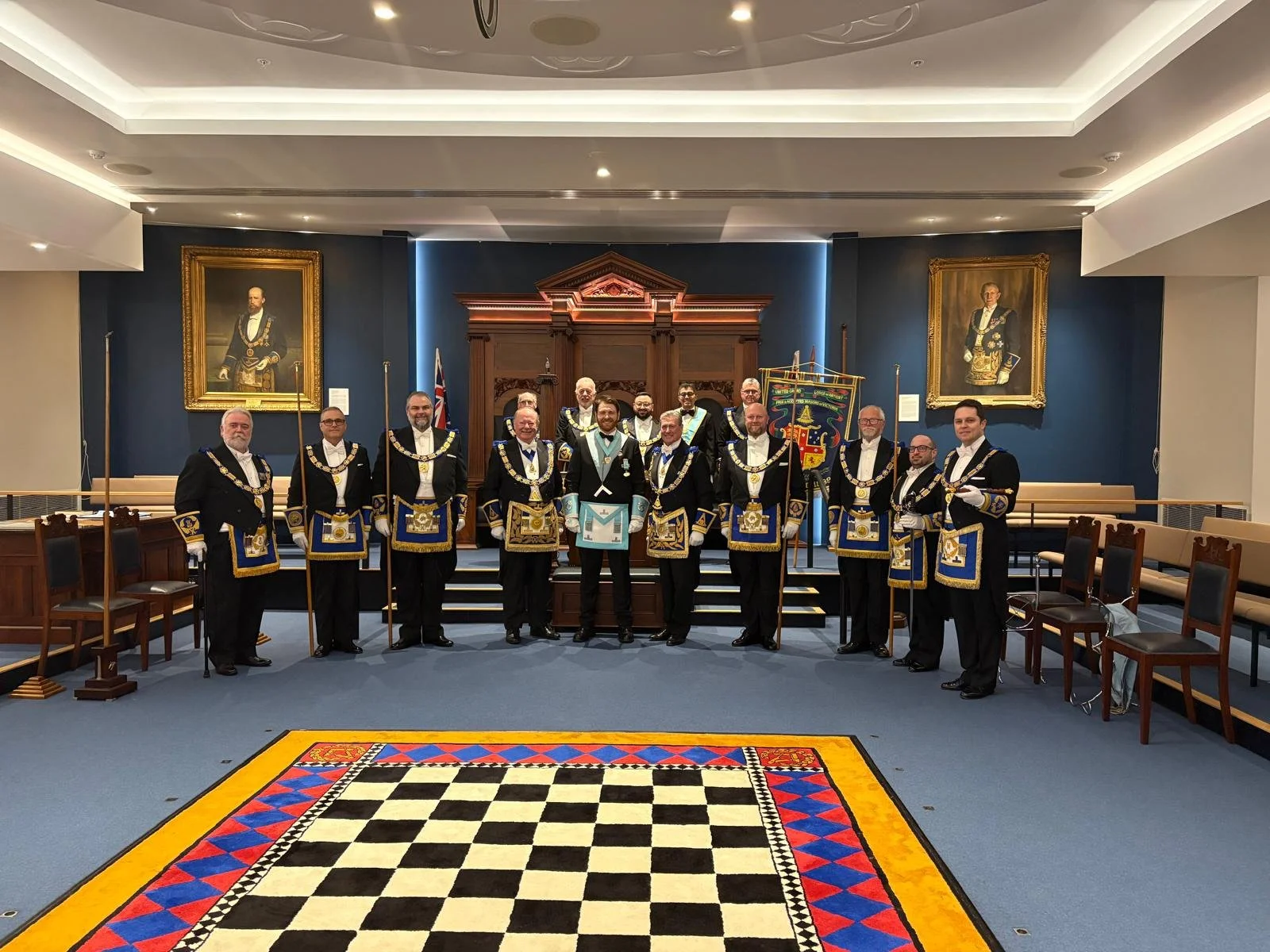
A selection of aprons from my installation night as the 165th Worshipful Master of North Melbourne Lodge No. 41 on June 1 2026.
The Symbolic Conflict: Protection, Recognition, and Rank
So, where do I perceive the conflict?
Freemasonry borrows its symbols from operative stonemasons. An operative stonemason would don an apron to protect his clothes and body from the work he was undertaking. Nobody wants to go home with dirty trousers or receive a slipped chisel to the leg!
So what about us speculative Freemasons?
Most Masonic commentators are quick to point out how aprons are used as a form of recognition. In one glance, you can ascertain whether a brother is an EA, FC, MM, or WM. So much for meeting on the level, eh? I suppose this was one area that conflicted with my prior experience in AMORC, where all members donned the same apron. Some Freemasons might point out that there is no conflict here, as it could be considered that all Masonic aprons contain a single white lambskin at their base. And whilst this is not incorrect, it just did not satisfy my own personal understanding.
Spend a moment, if you will, seeing the issue from my perspective. For ten years of my ritualistic life, prior to joining Freemasonry, I had not once even considered aprons as a form of recognition. So this point was kind of moot to me. From my viewpoint, the primary purpose of an apron was as a symbol of work and worship. Whether it was entering my personal sanctum for meditation or entering an AMORC Temple, donning an apron was one part of preparing myself mentally for the work I was about to undertake.
In fact, I would go one step further and suggest that tying off an apron, especially if you are ignorant of aprons being used as a mode of recognition, allows another more subtle distinction to take place. It allows you to feel connected to the other Brothers and Sisters across the world engaged in similar work. You feel an esprit de corps. Psychically, you might even sense the presence of others with whom you are sincerely engaged, across both time and space.
Martinists are naturally familiar with this concept, as the use of the Cordelier forms a significant event in many SI (or in some cases, IL) rituals of multiple Martinist rites. The other psychic benefit is that of a feeling of protection. Many initiates note a feeling of connection with a beneficent power far greater than oneself. It is like operating under the aegis of a very powerful egregore overseen and empowered by highly advanced personalities. Additionally, those of a ceremonial magic background might also see here a connection with a magic circle.
The Uniting Factor: The Sacred Garment of the Great Work
And whilst in Freemasonry, the more subtle connotations of wearing an apron are most certainly not generally discussed, I would urge all Brothers to be mindful when next attaching your apron.
Be mindful that, by donning an apron, you are solemnly preparing for your work. You are uniting with other sincere initiates similarly engaged. In other words, wearing an apron is an outward expression that says, I am at work. We have entered the quarry and are performing our labours.
To me, this is the factor that unites us across initiatic orders. We are all engaged in the Great Work. And to me, this is something truly beautiful.